a case by Aiham Farah
Using a complex esthetic patient case, it is demonstrated how thoughtful material selection, structured workflows, and modern digital technologies lead to highly esthetic, functional, and predictable results – and thus to patient satisfaction. Key aspects include the targeted selection of translucency and opacity levels, the use of the cut-back technique, and the combination of IPS e.max CAD and IPS e.max ZirCAD Prime to achieve harmonious overall results.
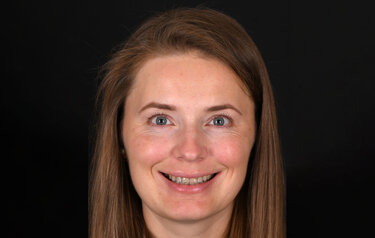
The patient desired bright teeth with high translucency and natural characterization in the incisal region; she deliberately opted for a bleach shade. The objective was to reproduce the multilayered effects of natural dentition as realistically as possible. In the maxilla, crowns with a cut-back design in the anterior region, as well as crowns and a three-unit bridge in the posterior region, were planned. In the mandible, veneers were chosen for the anterior region, while the posterior region was to be restored with monolithic crowns.
Images: Aiham Farah
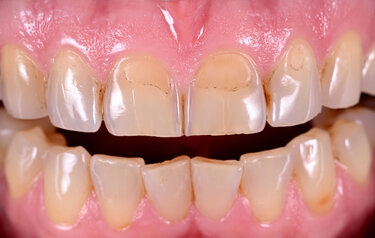
Based on the preparation depth defined in the mock-up, the lithium disilicate glass-ceramic IPS e.max CAD LT (low translucency) BL2 was selected. This material is ideal for masking discolored stumps and serves as a strong foundation for individual customization. Its bright shade compensates for the loss of brightness caused by layering and supports the desired final shade of BL4. For the posterior bridge, IPS e.max ZirCAD Prime was used.
On the central and lateral incisors, the cut-back technique was employed to create a lifelike enamel layer with optimized translucency and color gradient on the LT BL2 base. Canines, premolars, and molars were kept monolithic for enhanced stability, ensuring function and long-term durability.
Precisely created incisal edges allow individual patient wishes to be fulfilled. For a youthful smile, a finely adjusted translucency in the incisal area is essential.
In the posterior region, an IPS e.max ZirCAD Prime bridge was combined with IPS e.max CAD crowns. By carefully characterizing the monolithic restorations using IPS Ivocolor, a natural progression of color and translucency was achieved, resulting in a harmonious shade integration.
The cervical third was softened to BL3 using Shade Dentin 0, the middle third remained unchanged, and a delicate bluish hue in the incisal third created depth and opalescence - matching the cut-back of the anterior teeth.Im Seitenzahnbereich wurden eine IPS e.max ZirCAD Prime-Brücke und IPS e.max CAD-Kronen kombiniert. Durch gezielte Bemalung der monolithischen Restaurationen mit IPS Ivocolor entstand ein natürlicher Farb- und Transluzenzverlauf sowie eine harmonische Farbwirkung. Das zervikale Drittel wurde mit Shade Dentin 0 auf BL3 abgeschwächt, das mittlere Drittel blieb unverändert und im inzisalen Drittel sorgte eine zart bläuliche Nuance für Tiefeneffekt und Opaleszenz - passend zum Cut-Back der Frontzähne.
When Do I Prefer IPS e.max CAD over IPS e.max Press?
Both IPS e.max CAD and IPS e.max Press deliver outstanding esthetic and functional results. Over time, I have developed a clear decision-making process based on the balance between efficiency and specific case requirements. In my daily work, I prefer IPS e.max CAD because the workflow is efficient, no pressing sprue is required, and restorations can be adjusted intraorally in the blue state. In certain cases, however, IPS e.max Press is advantageous – for example, when mill ability is limited, or when enhanced (brightness) options are needed, which are better covered by the press ingots. By combining efficiency with individualized esthetics, I can achieve optimal results for every patient.
Both IPS e.max CAD and IPS e.max Press deliver outstanding esthetic and functional results. Over time, I have developed a clear decision-making process based on the balance between efficiency and specific case requirements. In my daily work, I prefer IPS e.max CAD because the workflow is efficient, no pressing sprue is required, and restorations can be adjusted intraorally in the blue state. In certain cases, however, IPS e.max Press is advantageous – for example, when mill ability is limited, or when enhanced (brightness) options are needed, which are better covered by the press ingots. By combining efficiency with individualized esthetics, I can achieve optimal results for every patient.
For lab technicians, the peace of mind that comes from not having to juggle different materials for a single case is truly priceless. Shape, tooth arrangement, occlusion, and function are challenging enough – mismatched shades if zirconia and glass-ceramic are combined, can turn even the most well-planned case into a nightmare.
Aligned product portfolios like IPS e.max provide the solution: perfectly coordinated materials allow for seamless integration. In cases like this one – where a zirconia bridge (IPS e.max ZirCAD Prime) is surrounded by single IPS e.max CAD crowns – harmonized shade concepts ensures perfect harmony. Universal layering ceramics and stains with identical firing temperatures further simplify the process.

Aiham Farah, Canada, is a certified dental technician (CDT, MDT) specializing in dental ceramics. He lectures internationally on topics including ceramic materials, esthetic CAD/CAM solutions, teamwork in dental technology, advanced cosmetic characterization, and more.