IPS e.max® ZirCAD® Prime Zirconia and e.max lithium disilicate are her preferred substructure materials for the fabrication of high-end, anterior restorations.
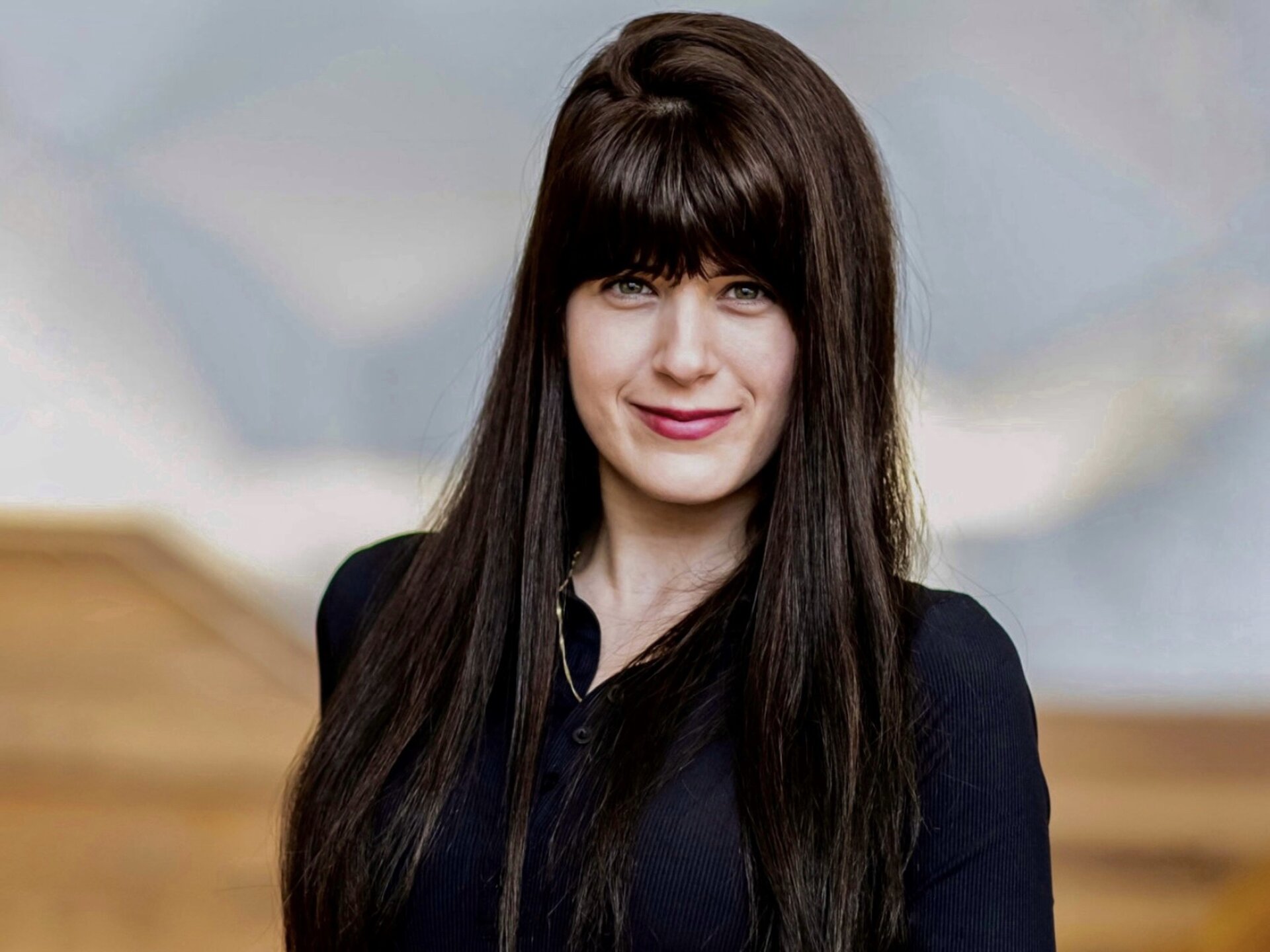
My name is Dani Farago, and I am a second-generation dental technician operating out of Ontario, Canada. I graduated from the dental technology program at George Brown College in 2017 and became a RDT the following year. Throughout the three-year program, I spent my days at school and my evenings at the crown and bridge lab my family owns in Toronto, working and improving my skills as a technician. I started as a CAD/CAM designer but quickly gained the ability to work in any department that concerns fixed-prosthetic dentistry.
Since graduating, I was fortunate enough to continue my education by learning the trade from talented ceramists worldwide. I travelled to Japan, where I attended a 4-week program at Osaka Ceramic Training Center, allowing me the opportunity to study under master ceramists Kataoka Shigeo and Wakita Daiyu. There, I studied dental anatomy, morphology and advanced techniques in dental ceramics, including porcelain stacking and staining procedures.
When I returned to the lab, I began investing more of my time into enhancing my porcelain skills and I shifted my focus to cosmetic dentistry and anterior esthetics.
One of the most exciting parts about my career is the endless room for growth and improvement. Dental technology is always advancing and there is a lifetime of learning involved, so my downtime at the lab usually consists of experimentation. I have spent countless hours mixing porcelains and stains, drawing build-up maps and recording results, as well as experimenting with building porcelain on different substructures, mainly zirconia and e.max lithium disilicate.
My favorite cases are the ones where I have the freedom to closely mimic nature. It is for that reason that single centrals (often the most challenging and tedious restorations to produce) are some of the most satisfying types of work. Making a crown blend seamlessly with the patient’s natural dentition is the ultimate goal and having the ability to make a crown that closely resembles a real tooth is what makes my job so fulfilling.
When working on high-end ceramic cases, both tools and materials play a role in the success of the final product. I have experimented with many brands of porcelain palettes and brushes over the years, all made from different materials and sold at various price points. Today, I work with instruments made by MPF, Smile Line, Harvest and Renfert, along with a few handcrafted tools that I have either made myself or that were gifted to me by fellow techs and teachers. Every technician has their own preferences which are completely unique to their style, so tool selection solely depends on the personality of the specific individual.
As for materials, I have been using Ivoclar products since the lab opened nearly nine years ago. Most of our zirconia restorations are milled from either IPS e.max ZirCAD Prime or Prime Esthetic material. Lithium disilicate cases are pressed from IPS e.max ingots. Copings, cutbacks and full contour crowns, regardless of the substructure choice, are stained internally and externally with IPS Ivocolor. Any porcelain stacking is done with IPS e.max Ceram.
Within the large range of ceramic products that I use daily, I find myself reaching for some more than others. Within the Ceram line, I work a lot with the Opal Effects and the Transpa porcelains, my favorites being Opal Effect 1, Opal Effect 3, Transpa Neutral, Transpa Brown-Grey and Cervical-Transpa Orange-Pink. In cases with especially unique shades, I mix Ivocolor Essences and Effects from the Ceram Selection kit into the existing porcelain, creating a custom blend that will help adjust the chroma, hue or value of the crown.
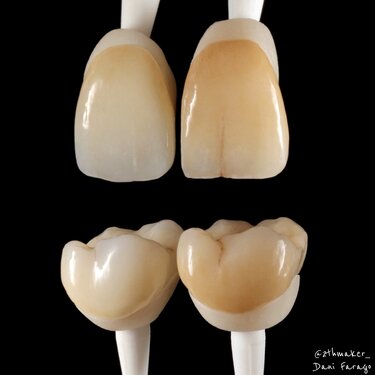
[Image below: IPS e.max ZirCAD Prime Esthetic restoration by Dani Farago]

Most modern labs have integrated digital dentistry in one way or another. Many of our clinics send over intraoral scans, allowing us to digitally design a crown to mill from wax, lithium disilicate or zirconia. We also have the option to send a STL to a 3D printer to fabricate highly accurate models. There is no doubt that digital dentistry has drastically improved and simplified a technician’s daily workflow. Still, there are some processes that we prefer to do in-lab, by-hand.
We often opt to wax and press an e.max crown or veneer using an ingot rather than milling from an e.max block. This method is more cost effective and time efficient, at least in our experience. Veneers are very difficult and delicate restorations and I prefer them to be 100% handmade, when possible. I will wax-up veneers and crowns on the model to full contour, make a silicone matrix and then cut them back buccally, creating adequate room for porcelain application. This technique gives me full control of both the fabrication and the final results.
As a ceramist, I will always prefer stacking porcelain to staining full zirconia and I will always be a believer in the need for human interference in all digitally made restorations.
[Image below: (L) IPS e.max Press restoration by Dani Farago; (R) IPS e.max ZirCAD Prime Restoration by Dani Farago]
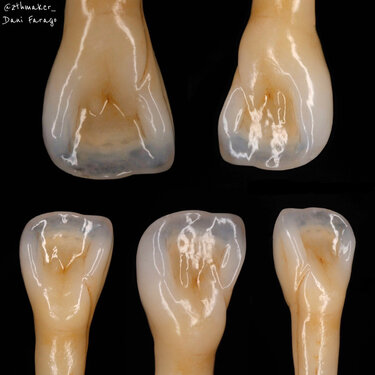
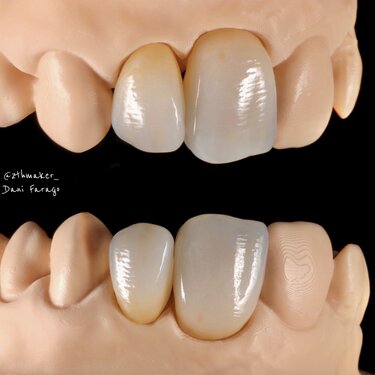
The benefit of IPS e.max lithium disilicate and IPS e.max ZirCAD prime is that both materials are highly esthetic, each coming in a variety of shades, levels of translucencies and with their own set of contraindications. Since e.max is a pressable porcelain, it was always the most esthetic option, but that fact is quickly changing with the recent introduction of esthetic zirconia, virtually guaranteeing a strong and natural end-result.
These two options have nearly eliminated the need for non-precious metal cores which is a relief for both patients and technicians. Cases that require a PFM crown are far and few between thanks to the strength, durability and versatility of the zirconia and lithium disilicate substructures sold today.
Since my mom used to be a professional photographer by trade, I was introduced to the art at a very young age but my affinity for dental photography only began in 2020, around the time of the first lockdowns here in Toronto. Bored and now with a bunch of extra time on my hands, I put all my focus and effort into starting something new. Highly motivated, I created my own Instagram profile and began showcasing my work, making friends within the online dental community and developing a passion for photography along the way.
Documenting my work publicly helped me to see patterns in the cases I did. With each new post, I began developing my own photography style. Recording my step-by-step process and photographing end-results really helped me grow as a professional and as a hobbyist.
Through my newfound passion, I started taking Instagram more seriously and began involving myself further in this amazing platform that is full of talented and dedicated dental specialists. These same people, once complete strangers, were suddenly my source of inspiration, quickly becoming a big part of my personal and professional life. It is through this very community that I met and began working with the supportive team at Ivoclar!
My profile acted as a portfolio of my work and a visual journal of my progress, helping me to successfully brand myself as a professional and market my skills as a ceramist.
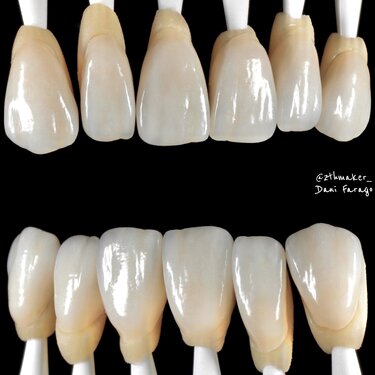
[Image below: (L) IPS e.max ZirCAD Prime Esthetic restoration made by Dani Farago; (R) IPS e.max Press restoration made by Dani Farago]
Receive our monthly newsletter on recently published blog articles, upcoming education programs and exciting new product campaigns!
© 2022 Ivoclar Vivadent, Inc. Ivoclar, IPS e.max, ZirCAD, Prime, IPS Ivocolor are trademarks of Ivoclar Vivadent, Inc.

